
Heating and cooling
Heat pump installation
A heat pump is a good fit for some houses and a poor fit for others, and there is a lot written about them that pulls hard in both directions. Tell us about your property and we'll tell you honestly whether it is worth pursuing.
Straight answers
The things people ask first
- Do I need a survey?
- Always, with a room by room heat loss calculation. Photos get you an honest ballpark and tell us quickly whether a heat pump suits your house at all, but a firm price needs measuring. Anyone quoting a heat pump off a photograph alone is guessing.
- Will my radiators have to be replaced?
- Sometimes, and usually not all of them. It depends on the flow temperature your house needs, which is exactly what the heat loss calculation tells us. Two or three bigger radiators is a common answer.
- Is there a grant?
- £7,500 from the Boiler Upgrade Scheme, rising to £9,000 for eligible properties off the mains gas grid that heat with oil or LPG. It has to be an MCS certified installation to qualify.
- Which heat pumps do you fit?
- Ideal, Daikin and Panasonic, chosen against your house rather than against a supplier target.
- How long does it take?
- Longer than a boiler. Survey, design, grant paperwork and then the installation itself, so plan in weeks rather than days.
In the price
Everything that is included
- An honest assessment of whether your property suits a heat pump
- Heat loss calculation and emitter review
- System design and specification
- Installation and commissioning
- Controls set up and explained
- Help with the Boiler Upgrade Scheme application
Not in the price
And everything that is not
- Insulation work
- Radiator upgrades where the heat loss calculation shows they are needed, quoted separately
- Electrical supply upgrades
- Groundworks for ground-source systems
If your job needs any of these, we tell you before you commit, not on the day, and not after a deposit.
How it works
From first click to job done
- 01
Tell us about the property
Age, size, insulation, current heating. We need more here than for a boiler.
- 02
We assess it honestly
A straight view on whether it stacks up for your house, before you spend anything.
- 03
Design and price
If it makes sense, a designed system with a written price and the grant accounted for.
- 04
We fit it
Installed, commissioned and explained, with the paperwork done.
Where we do it
Heat pump installation near you
These are the places we do enough work to write about properly. The rest of the patch is on the areas we cover page.
- Heat pump installation in Doncaster
Doncaster
DN1 to DN12
- Heat pump installation in Rotherham
Rotherham
S60 to S66
- Heat pump installation in Barnsley
Barnsley
S70 to S75
- Heat pump installation in Sheffield
Sheffield
S1 to S14, S17, S20, S35 and S36
- Heat pump installation in Wakefield
Wakefield
WF1 to WF11
- Heat pump installation in Scunthorpe
Scunthorpe
DN15 to DN17
- Heat pump installation in Leeds
Leeds
LS1 to LS29
What we fit
The kit that goes on the van
We are not tied to one manufacturer, so the honest answer to which one you should have is: whichever one suits your house. Here is what we fit most, what each is genuinely good at, and the thing about each one that the brochure puts on the last page.
Ideal
Logic Air
A British-built heat pump, from the people who make half of Yorkshire's boilers.
- Made in Hull
- Up to 7 years parts and labour
- Made on the same Hull site as the boilers, on a line they opened in 2023. Parts and support are a phone call away rather than a shipping container away.
- Rated SCOP 5.19 when it runs at 35 degrees flow, and 3.73 at 55. That gap is the whole radiator conversation in two numbers, and it is on Ideal's own page rather than buried.
- Four sizes from 4kW to 10kW, so it gets sized to a heat loss calculation for your house, not to a rule of thumb.
Worth knowingThat efficiency drops by a quarter if the system has to run hot, and it has to run hot when the radiators are too small. Which is why we survey heat pumps properly instead of quoting off a photograph.
Registered within 30 days and serviced annually.
Daikin
Altherma 3
The one for a house where ripping out every radiator isn't on the table.
- Made in Europe
- The high temperature version gets to 70 degrees flow even at minus fifteen, without an electric heater helping it. That is the honest answer to whether your existing radiators can stay.
- The monobloc version has no indoor unit at all. In a terrace or a flat, getting your airing cupboard back is often what decides it.
- Built in Belgium, Czechia, Poland or Germany depending on the model, all of it in Europe.
Worth knowingThe monobloc is the louder of the two outside. If your unit is going under a neighbour's window, that is a conversation to have at survey rather than after.
Panasonic
Aquarea
The one we reach for when the winter bill is the whole question.
- Made in Czechia
- The L Generation gets your hot water to 65 degrees without switching on an immersion heater. Most heat pump quotes hide an electric top-up in there, and it lands on the bill every week.
- It uses R290, which has a global warming potential of 0.02 against 675 for the usual refrigerant. Refrigerant rules only ever tighten, so that is a system that ages well.
- The T-CAP models hold their full output down to minus fifteen without an electric booster. A normal heat pump quietly loses output as it gets colder and makes up the difference with electricity, which is where surprise January bills come from.
- Built in Panasonic's Czech factory, which they have just put 320 million euros into.
Worth knowingT-CAP does not mean there is no backup heater in the system at all. It means it should not need to lean on it. We will show you the heat loss figures rather than ask you to take that on trust.
Our work
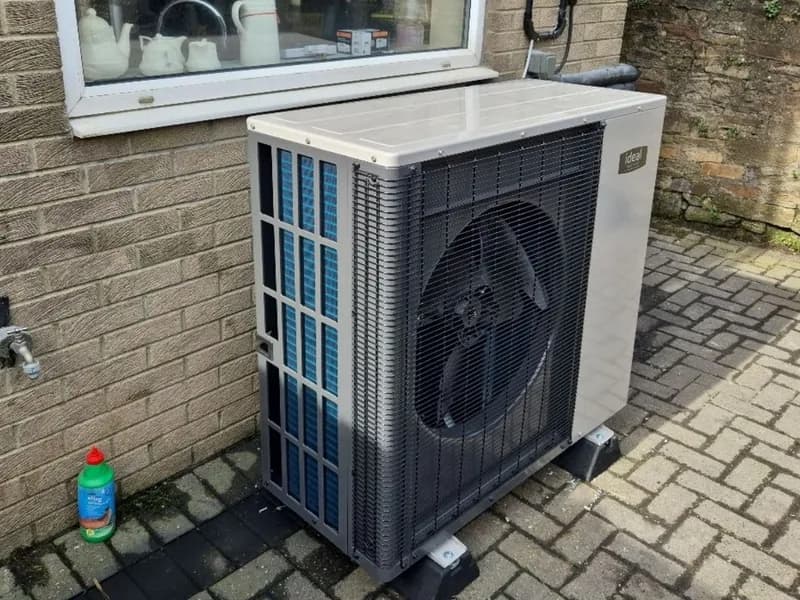
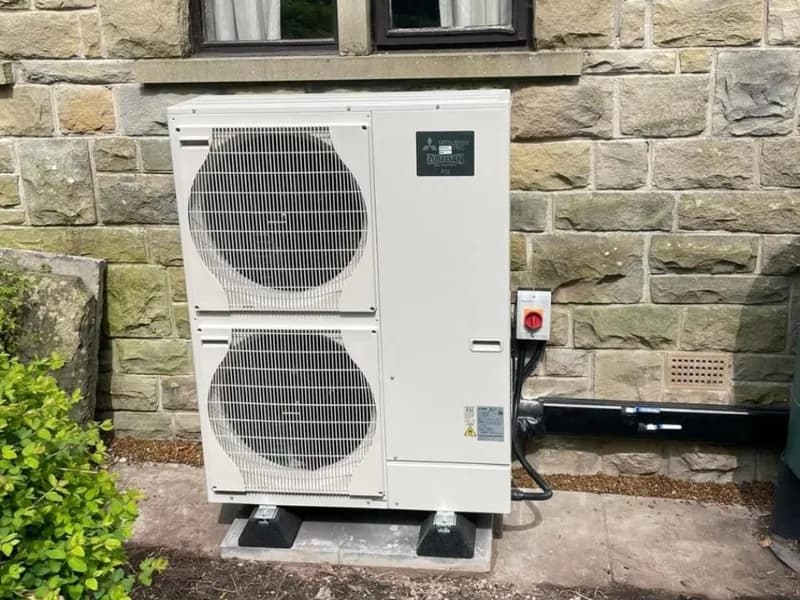
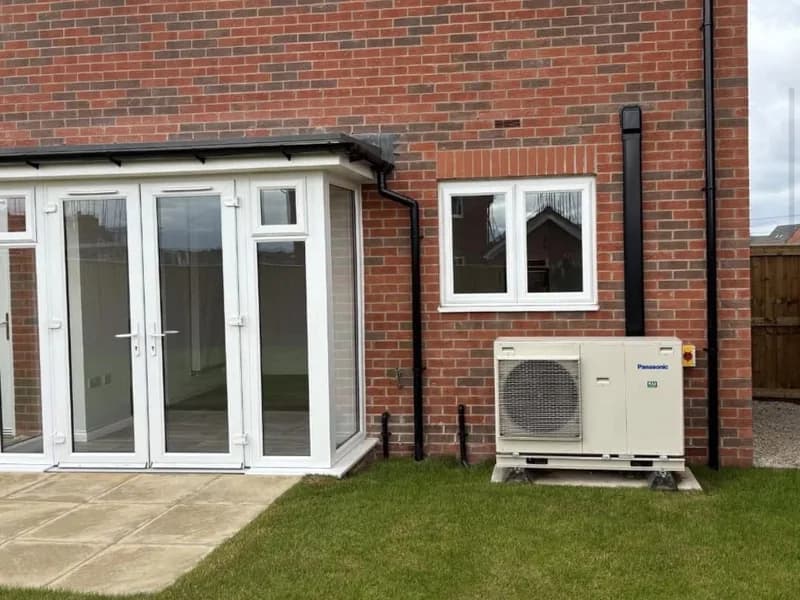
Heat pump installation we have done
Why now
This one takes longer than people expect
A heat pump done properly means a survey, a heat loss calculation for every room, sometimes a couple of bigger radiators, and a grant application that has its own timetable.
That is weeks rather than days, and it is work you want happening while the house is warm anyway. Start it in October and you live through the disruption in the cold, which is nobody’s idea of a good winter.
You don’t have to phone. Send the form and we come back to you.
Questions
The things people actually ask
Will it work in an older house?
Sometimes yes, sometimes only after other work. The honest answer depends on heat loss, not on the age on the deeds. We will tell you which yours is rather than sell you one regardless.
Is it cheaper to run than gas?
Depends on your house, your tariff and how the system is designed. Anyone giving you a single number without having seen your property is guessing.
How much is the grant?
The Boiler Upgrade Scheme currently offers £7,500 towards an air source or ground source heat pump, rising to £9,000 for eligible properties off the mains gas grid that heat with oil or LPG. Installation has to be by an MCS certified installer for the grant to apply.
Do I need bigger radiators?
Often some of them, yes. A heat pump runs at a lower flow temperature than a boiler, so emitters have to be sized for it. The heat loss calculation tells us which rooms are affected. We do not guess, and we do not swap the lot as a matter of course.
Get a price for heat pumps
Tell us about your home and we'll put a written price in front of you.